California Medication Error Lawyer
Take advantage of our free, private case review offer. Simply fill out the form or call us at (949) 640-8222 to schedule your consultation.





A prescription is supposed to treat an illness, control pain, or protect your health. Receiving the wrong drug, the wrong dose, or incorrect instructions can instead send you to the emergency room, worsen an existing condition, or cause an entirely new medical problem.

Hodes Milman represents people harmed by prescription and dispensing mistakes throughout California. If a medication error has seriously affected you or someone in your family, speaking with a California medication error lawyer at Hodes Milman gives you an opportunity to have the prescription, dispensing records, and resulting injuries reviewed.
Our attorneys have more than 30 years of experience handling complex medical negligence cases and have recovered more than $400 million for our clients.
Contact Hodes Milman online or call (949) 640-8222 for a free, confidential consultation.
“Patients should be able to rely on the medication they receive being the medication their doctor prescribed. When that process fails, we want to know why it happened, who was responsible, and how the mistake affected the patient's health.”

What Is a Medication Error?
A medication error can happen at several points between a doctor deciding what medication you need and that medication reaching you. A mistake may occur when a drug is prescribed, entered into your medical record, prepared, dispensed, labeled, or administered.
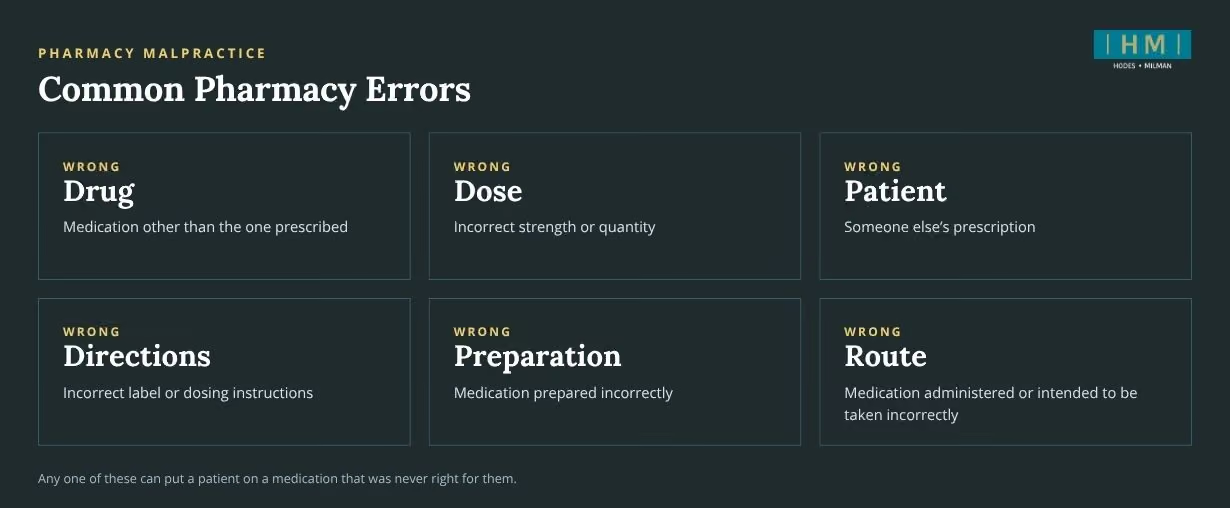
Pharmacy errors are one type of medication error. They occur during the preparation or dispensing process and may involve the wrong drug, dosage, patient, directions, preparation, or route of administration.
A medication error may cause an adverse drug reaction, overdose, dangerous interaction, organ damage, or another injury. You may also be harmed because the medication you were supposed to receive was never taken, allowing the original illness or condition to go untreated.
Errors can occur at independent pharmacies, major retail chains, hospital and outpatient pharmacies, mail-order pharmacies, medical offices, and other healthcare facilities throughout California.
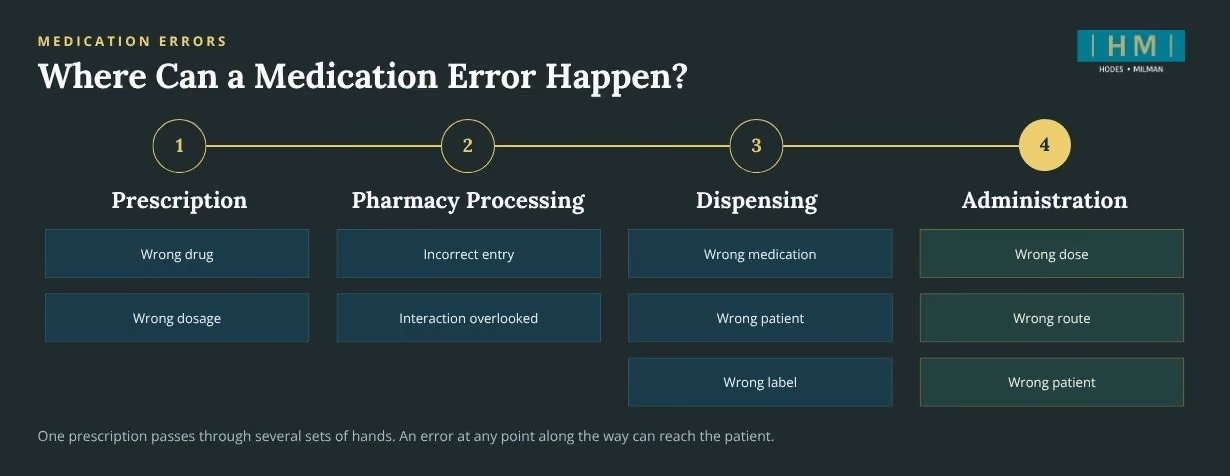
Where Can a Medication Error Happen?
Medication safety involves several people and several steps. An error may happen before a prescription ever reaches the pharmacy counter.
For example:
- A doctor may prescribe the wrong drug or dosage.
- Prescription information may be entered incorrectly into an electronic system.
- A pharmacy may prepare or dispense the wrong medication.
- The correct drug may be placed in a bottle with incorrect directions.
- Medication may be given to the wrong patient.
- A nurse or other healthcare provider may administer the wrong drug or dosage in a hospital or medical facility.
Finding where the error occurred helps identify the records, healthcare providers, pharmacies, and other evidence that need to be investigated.
Can I Sue a Pharmacy for Giving Me the Wrong Medication?
You may have grounds to pursue a claim if a pharmacy dispensed the wrong medication and you were injured as a result.
Receiving an incorrect prescription does not by itself establish the damages in a lawsuit. The error must be connected to an injury. That could include an adverse drug reaction, overdose, organ damage, hospitalization, additional treatment, worsening of the condition the correct medication was supposed to treat, or another medical problem.
Evidence may include:
- The prescription written by your healthcare provider
- The medication and prescription bottle you received
- Pharmacy labels, receipts, and medication instructions
- Medical records documenting your reaction or injury
- Pharmacy dispensing records
- Testimony from pharmacists, physicians, or other qualified experts
Do not discard the bottle, remaining medication, packaging, receipt, or paperwork you received from the pharmacy. These items may help establish what you were given and how it differed from the medication prescribed.
In a California pharmacy error lawsuit, the prescription bottle, label, remaining medication, receipt, and dispensing records may become important evidence of what occurred.
Cases involving the wrong drug often begin with a comparison of the original prescription and what the patient actually received, followed by a review with a California pharmacy error lawyer of the dispensing records and resulting medical care.
Wrong Drug, Wrong Dose, Wrong Patient: Common Pharmacy Errors
A dispensing mistake does not always mean someone grabbed the wrong bottle. Errors can occur when information is entered, a prescription is prepared, medication is labeled, or instructions are provided to the patient.
Wrong Medication
Drugs with similar names or packaging can be confused, and the wrong medication may also be selected from a shelf or dispensing system. The wrong medication may cause adverse effects while leaving the patient's original medical condition untreated.
Wrong Dosage or Strength
A prescription may be filled with the correct drug but at the wrong strength. Dosage mistakes can be dangerous for anyone and may pose serious risks to children, older adults, and patients taking medications with narrow dosing ranges.
Medication Given to the Wrong Patient
A patient may receive another person's prescription because of a labeling, identification, or pickup error. The patient may then take a drug that was never prescribed while missing doses of the medication actually needed.
Incorrect Instructions or Labeling
The medication inside the bottle may be correct while the label is wrong. Incorrect directions about how much medication to take, how frequently to take it, or how it should be administered can lead to an overdose, inadequate treatment, or other harm.
Dangerous Drug Interactions or Allergies
Medication records may contain information about other prescriptions and known allergies. When that information is missed or a serious contraindication goes unaddressed, a patient may suffer a preventable reaction.
Expired or Improperly Prepared Medication
Dispensing expired medication may leave a patient with ineffective or unsafe treatment. Mistakes may also occur when certain medications are prepared or compounded incorrectly.
What Safety Checks Are California Pharmacists Expected to Follow?
California pharmacists have responsibilities that extend beyond placing the correct medication in the bottle.
State pharmacy rules require patient consultation in certain circumstances, including when a patient receives a new prescription or when there has been a change in dosage form, strength, or written directions. Pharmacists also review patient medication information as part of the dispensing process.
A consultation gives the pharmacist an opportunity to discuss how the medication should be taken, potential side effects or interactions, and other information relevant to safe use.
California also requires community pharmacies to report qualifying medication errors through the state's medication-error reporting system. Reportable errors include mistakes involving the wrong drug, dose, patient, directions, preparation, or route of administration.
These requirements may become relevant when investigating how a serious medication mistake occurred and what records exist regarding the incident.
Who Can Be Held Liable for a Medication Error?
Finding where the medication process failed is also important for identifying who may be responsible.
Potentially responsible parties may include:
- A pharmacist who incorrectly filled, checked, or dispensed a prescription
- A pharmacy technician whose actions contributed to the mistake
- The pharmacy or company responsible for the dispensing operation
- A physician or other healthcare provider who made a prescribing error
- A hospital or medical facility involved in administering the medication
- Another party whose conduct contributed to the injury
A defective drug or dispensing device may raise separate product liability issues.
The original prescription, electronic entries, pharmacy records, labels, dispensing information, and medical records can help establish where the process broke down. Identifying each person or business involved allows a California pharmacy error attorney to determine whose conduct contributed to the mistake.
Medical records, pharmacy records, prescription information, and expert review give your California medication error lawyer a clearer picture of where the medication process failed. That evidence can also help connect the mistake to the treatment, lost income, and other losses that followed.
Contact Hodes Milman online or call (949) 640-8222 to discuss what happened and whether the evidence supports a claim.
How Long Do I Have to File a Medication Error Lawsuit in California?
California places deadlines on claims involving professional negligence by healthcare providers.
Under California Code of Civil Procedure § 340.5, an action for injury or death against a healthcare provider based on professional negligence generally must be filed by the earlier of three years after the date of injury or one year after the patient discovers, or through reasonable diligence should have discovered, the injury.
Exceptions and different rules may apply in certain circumstances, including cases involving minors.
California law also requires at least 90 days' prior notice before commencing an action based on a healthcare provider's professional negligence.
Not every medication-related claim is necessarily governed by the same filing deadline. For example, a case involving a defective medication or product may raise different legal issues from professional negligence by a licensed healthcare provider.
You may also discover a medication error after the prescription was filled. An unexpected reaction, a later medical appointment, or a subsequent refill may be what first alerts you that the medication or dosage was wrong. Reviewing when the injury occurred and when you learned of the error is important when determining how much time remains to file.
What Injuries Can a Medication Error Cause?
The wrong medication or dosage can cause anything from an adverse reaction requiring additional treatment to permanent organ damage, brain injury, or death.
Serious medication errors may result in:
- Organ damage: Certain medications or overdoses can injure the kidneys, liver, heart, or other organs.
- Brain injury: Respiratory depression, cardiac complications, or other reactions may deprive the brain of oxygen.
- Neurological injuries: Medication toxicity and adverse reactions may cause lasting neurological problems.
- Dangerous drug interactions: Combining incompatible medications may produce serious or potentially fatal reactions.
- Worsening illness: Receiving the wrong drug may leave the condition for which you originally sought treatment untreated.
- Overdose: Excessive doses can cause respiratory failure, loss of consciousness, coma, or other severe complications.
- Death: A serious medication error may result in a fatal overdose, adverse reaction, or progression of an untreated condition.
What Compensation May Be Available After a Medication Error?
A medication mistake may lead to emergency treatment, hospitalization, additional prescriptions, time away from work, rehabilitation, or ongoing medical care.
Compensation in a successful claim may include:
- Past and Future Medical Expenses: Emergency treatment, hospitalization, medication, rehabilitation, and future medical care related to the injury.
- Lost Wages: Income lost while you were unable to work because of the medication error.
- Reduced Future Earning Capacity: Losses associated with an injury that limits your ability to return to your previous work or earn the same income.
- Pain and Suffering: Compensation for physical pain, emotional distress, and other non-economic harm.
- Long-Term Care Needs: Costs associated with permanent disability, rehabilitation, assistance, or future medical treatment.
- Wrongful Death: Certain surviving family members may pursue damages when a medication error results in a patient's death.
The injuries and financial losses caused by the medication error help establish what damages may be pursued. Medical records, employment information, and expert analysis help a California medication error attorney document the financial and personal losses tied to the injury.
What Is Pharmaceutical Fraud?
Some medication-related cases involve intentional misconduct instead of an accidental prescribing or dispensing error. Pharmaceutical fraud may involve improper prescribing, dispensing, billing, kickbacks, or other financial arrangements.
Hodes Milman has handled litigation involving allegations of opioid and narcotics abuse connected to a physician who faced federal criminal allegations involving narcotics and money laundering.
Intentional misconduct may raise civil claims that differ from those involved in an ordinary pharmacy dispensing error. Identifying who participated and how that conduct harmed the patient is an important part of evaluating these cases.
What Evidence Is Important in a Medication Error Case?
The prescription bottle may immediately show that something went wrong, but investigating the complete medication process may require records from several sources.
Evidence may include:
- The original prescription and prescribing records
- Pharmacy dispensing and transaction records
- Medication labels and instructions
- Your medication history
- Medical records from treatment after the error
- Test results documenting the resulting injury
- Testimony from pharmacists and medical experts
- Evidence of lost income and future medical needs
Medication Errors Across California
Medication errors can occur at neighborhood pharmacies, major retail chains, hospital pharmacies, mail-order pharmacies, medical offices, and healthcare facilities throughout the state.
Hodes Milman represents injured patients and families throughout California, including Orange County, Los Angeles County, San Diego County, Riverside County, and San Bernardino County, as well as communities throughout Southern California and across the state.
California patients can also report prescription errors and pharmacist misconduct to the California State Board of Pharmacy. The Board accepts complaints involving problems such as incorrect labeling, the wrong drug or dosage, unauthorized refills, and expired medication.
A Board complaint and a civil claim serve different purposes. The Board oversees pharmacy licensing and discipline, while a civil claim addresses the injuries and losses caused by the medication error.
Why Choose Hodes Milman for a Medication Error Case?
A serious medication error may leave you recovering from the reaction itself while still needing treatment for the condition the correct prescription was supposed to address.
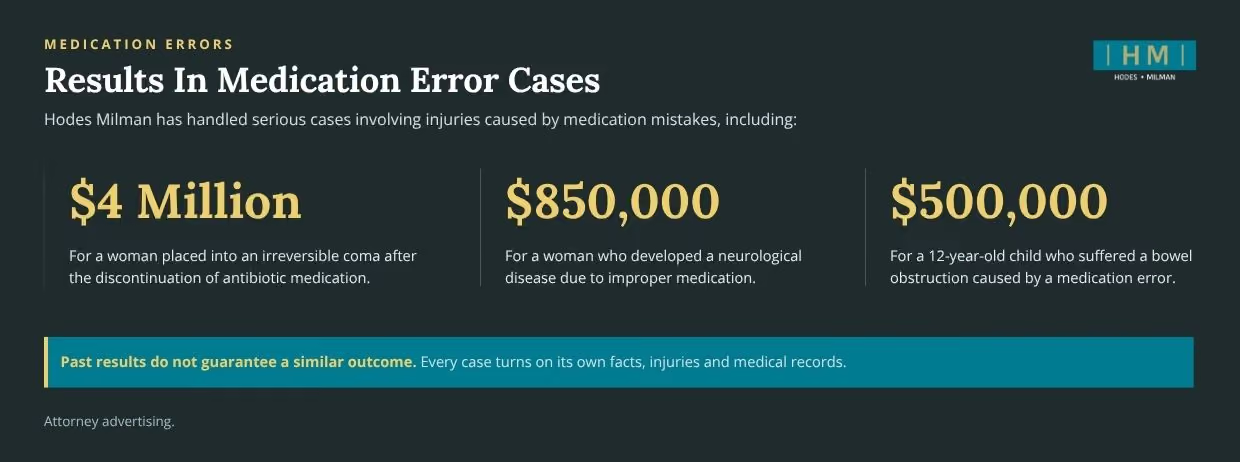
Hodes Milman has represented people injured by prescription and medication errors for decades. Our attorneys have handled cases involving neurological injuries, coma, injuries to children, and other serious harm, with medication-related recoveries reaching millions of dollars.
We take the time to understand your medical history, the medication involved, and how the error affected your health and your family. You will know who is handling your case, receive updates as the case progresses, and have access to your legal team when you have questions.
“Dan Hodes represented me during a very difficult time in my life, and I am so appreciative of his support. From the beginning, he made me feel seen, heard, and taken seriously. He took ample time to walk me through every step of the process, explained complex legal issues clearly, and was always responsive when I had questions.
I always felt he had my best interests at the forefront and that he genuinely cared about my case, not just as a file, but as a person.”
– Nora Mansour
Talk With Hodes Milman About a Medication Error
Finding out that you took medication that was not what your doctor prescribed can raise new concerns about your health and the treatment you still need. You may also have no idea whether the mistake began with the prescription, the pharmacy, or somewhere else in the process.
Hodes Milman has the experience and resources to investigate serious medication errors and identify who was responsible. If you or someone in your family was injured by the wrong medication, an incorrect dosage, improper instructions, or another prescription error, call (949) 640-8222 or contact us online for a free, confidential consultation.
Proudly Serving California Residents


Dan Hodes treated me like a human being, not just another client. He showed me he cared by how hard he worked on my case.
My daughter was born with a disability due to doctor neglect. I emailed over 200 lawyers over a 2 year time span. I had ONE lawyer believe in my case and he worked with Jeff Milman over the next year helping build my case. Jeff won my case and I cannot thank him enough for believing in me!! He was so pleasant to work with and professional. I will forever be thankful to him and his team!
They are friendly and honest and fought for what they believed was best in our interest.
California Medication and Pharmacy Error FAQs

If you have taken the medication and are experiencing a serious reaction, seek appropriate medical help immediately. You can also contact your prescribing healthcare provider to confirm what medication and dosage you were supposed to receive.
Keep the prescription bottle, remaining medication, packaging, receipt, and paperwork from the pharmacy. These items may help document exactly what was dispensed.
Keep the medication and its original container until you understand whether they may be needed as evidence. You can contact the pharmacy to report the problem and obtain information, but retaining the bottle, label, contents, receipt, and related paperwork may help document what you received.
You can submit a complaint to the California State Board of Pharmacy. The Board accepts complaints involving prescription errors and pharmacist misconduct.
A Board complaint is separate from a civil claim for compensation. Reporting the pharmacy does not recover compensation for medical expenses, lost income, or other losses caused by an injury.
No. A pharmacy error is one type of medication error.
Medication errors may occur when a drug is prescribed, prepared, dispensed, labeled, or administered. Pharmacy errors generally involve mistakes that occur while a pharmacy prepares or dispenses the prescription.
Identifying where the error happened helps determine which records and parties need to be investigated.
Medication errors may not be discovered immediately. You might notice unexpected symptoms, learn about the error during a later medical appointment, or discover that the pills do not match a previous refill.
When you discovered or reasonably should have discovered an injury may affect the filing deadline in a professional-negligence claim. Keep records showing when you first learned about the error and when symptoms began.
A labeling mistake may cause a patient to take too much medication, too little, or take it at the wrong intervals even though the correct drug was placed in the bottle.
The prescription, bottle, label, pharmacy records, and resulting medical records may help establish what happened and whether the labeling error caused an injury.
Yes. An error may occur at more than one point between prescribing and dispensing a medication. There may be questions about what the doctor originally ordered as well as what the pharmacy ultimately prepared or provided.
Reviewing both sets of records helps identify where the error occurred and who may be responsible.
Proudly Representing California Residents
Your life changed in an instant. Getting justice shouldn’t wait. Connect with Hodes Milman today and put a proven team to work on your case.